Most people associate corrosion with beachfront buildings, marine environments, or heavy industrial facilities. While these locations certainly present higher risks, corrosion is not limited to extreme environments.
A recent inspection by Blygold New Zealand demonstrated just how quickly corrosion can compromise HVAC equipment, even in what appeared to be a relatively low-risk location.
The outdoor air conditioning unit had been installed approximately six years earlier and was located in a car park, well away from the coastline and with no obvious heavy industrial activity nearby. On paper, there seemed little reason to expect significant deterioration.
However, the condition of the equipment told a very different story.
A Six-Year-Old Unit That Looked Fifteen
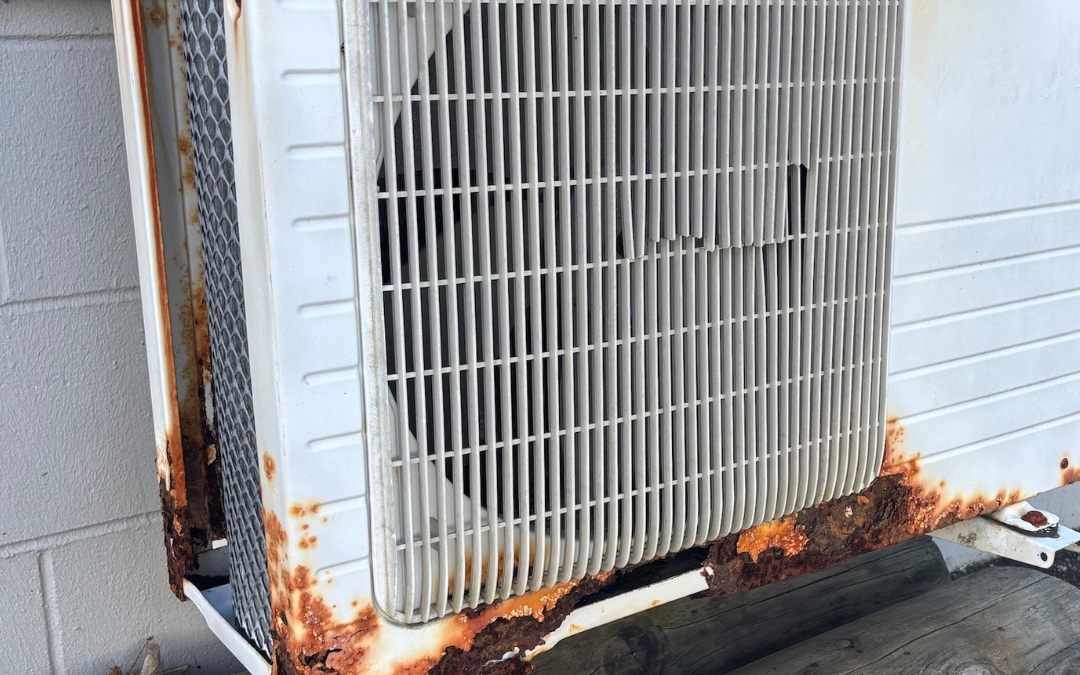
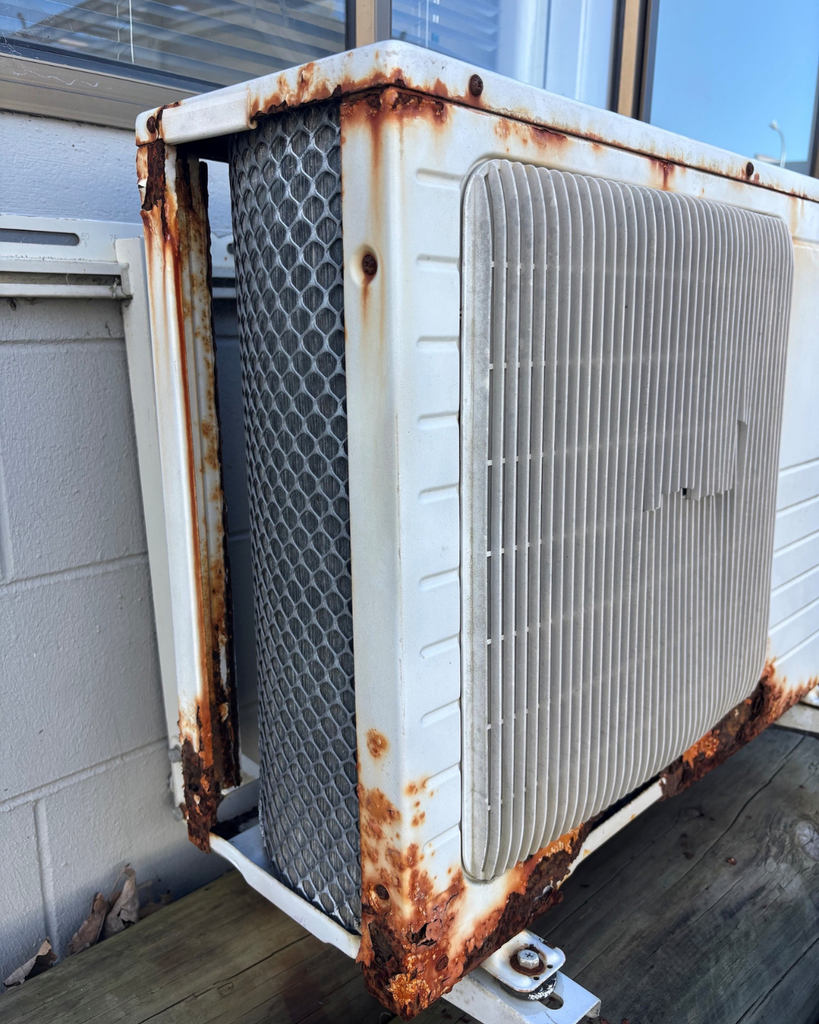
During the inspection, extensive corrosion was evident throughout the unit. The casing, frame, brackets, and supporting components showed significant deterioration, with sections of metal visibly breaking down.
The most serious damage, however, was hidden inside.
Upon closer examination, the coils had deteriorated so severely that material was effectively disintegrating when touched. At this stage, there was no practical or responsible recommendation other than complete replacement of the outdoor unit.
The owner explained that a transparent protective coating had been applied previously. While the specific product and application method were unknown, the outcome highlighted an important reality:
Not all corrosion protection systems deliver the same level of performance.
Every Component Matters
When discussing corrosion, attention often focuses on major items such as coils and heat exchangers. Yet an outdoor HVAC unit consists of numerous components that all contribute to performance, safety, and longevity.
Casing panels, support frames, brackets, fasteners, pipework, headers, and coils each play an important role in the operation of the equipment.
When corrosion affects these components, the consequences can quickly escalate:
- Structural supports can weaken.
- Coils may develop refrigerant leaks.
- Pipework can fail and require costly repairs.
- Damaged panels can expose additional surfaces to environmental attack.
- System efficiency can decline as components deteriorate.
Once corrosion reaches a critical stage, protective coatings may no longer be enough to restore the equipment.
The Hidden Cost of Waiting
Perhaps the most surprising aspect of this case was the age of the equipment.
Six years is not a particularly long service life for a commercial air conditioning system. Yet this unit had deteriorated to a point where replacement represented the most sensible and cost-effective option.
While anti-corrosion protection requires an upfront investment, it should be considered against the potential costs of premature equipment failure, refrigerant loss, emergency repairs, increased energy consumption, labour expenses, and early replacement.
By the time corrosion becomes obvious, the damage may already be irreversible.
Prevention Delivers the Greatest Value
Corrosion protection is not simply about preserving the appearance of HVAC equipment. It is about protecting the performance, reliability, and lifespan of critical assets before deterioration begins.
At Blygold, our specialised coating systems are designed specifically for HVAC and refrigeration equipment, providing long-term protection while maintaining thermal performance and airflow efficiency.
The objective is simple: protect equipment while it is still new, before corrosion has the opportunity to take hold.
Because once a system reaches the point where coils are disintegrating and structural components are failing, the question is no longer, “Can we protect this unit?”